
Aluminum responds to heat completely differently than steel or stainless steel. Heat aluminum and it moves, twists, bends, and warps. The material is nearly as conductive as copper, which means it absorbs and distributes heat aggressively throughout the part.
This heat sensitivity makes aluminum welding far more complicated than steel welding. You need welders who understand how the material will respond to heat input and how to sequence welds properly to manage distortion. It requires a more scientific approach to achieve quality results.
The problem? Good aluminum welders are extremely hard to find—even harder than finding general welders, which is already a challenge.
Many manufacturers are transitioning from steel trailers to aluminum or hybrid trailers. The transportation industry is driving this shift because lighter trailers mean better fuel efficiency for long-haul trucking. When you’re driving across the country, the weight savings create real ROI.
But these companies have 50 to 100 years of steel welding experience. Their entire workforce knows steel. You can’t put a steel welder on aluminum welding and expect the same results. The materials behave differently, require different techniques, and demand different expertise.
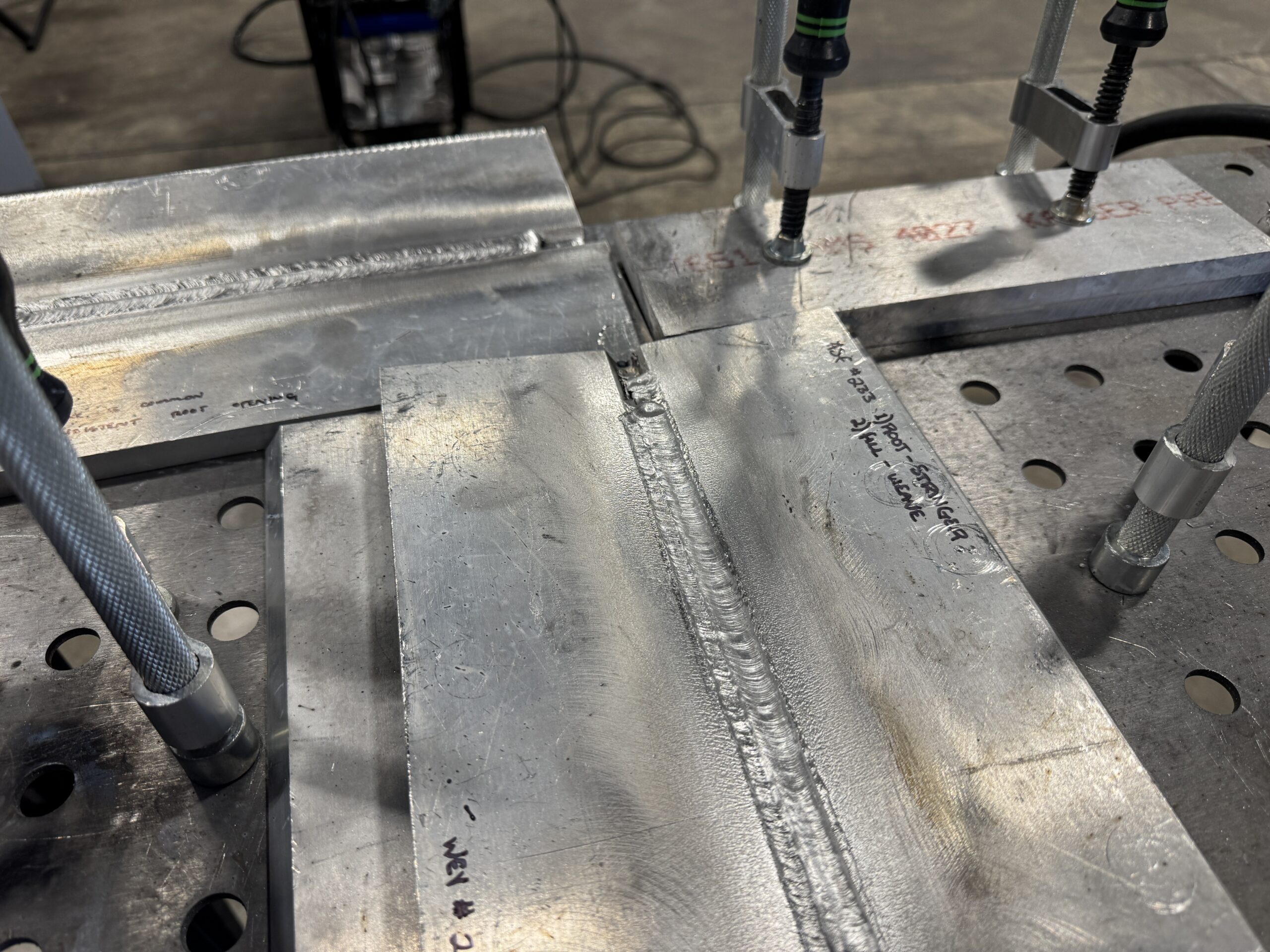
We build robotic welding systems with in-house expertise on aluminum welding. We understand how the material responds to heat and program robots with the proper sequencing and weld parameters that achieve quality results.
Our aluminum welding automation eliminates your need to find and hire specialized aluminum welders, who are extremely difficult to find. The robot performs the same techniques a skilled human aluminum welder would use, but with consistency, quality, and increased throughput. We handle the programming, so you don’t need aluminum welding expertise in-house.
We also design custom tooling and fixturing solutions specifically to prevent the twisting and warping that aluminum experiences during welding. Our fixtures account for how the material behaves under heat, keeping your final part dimensions correct.
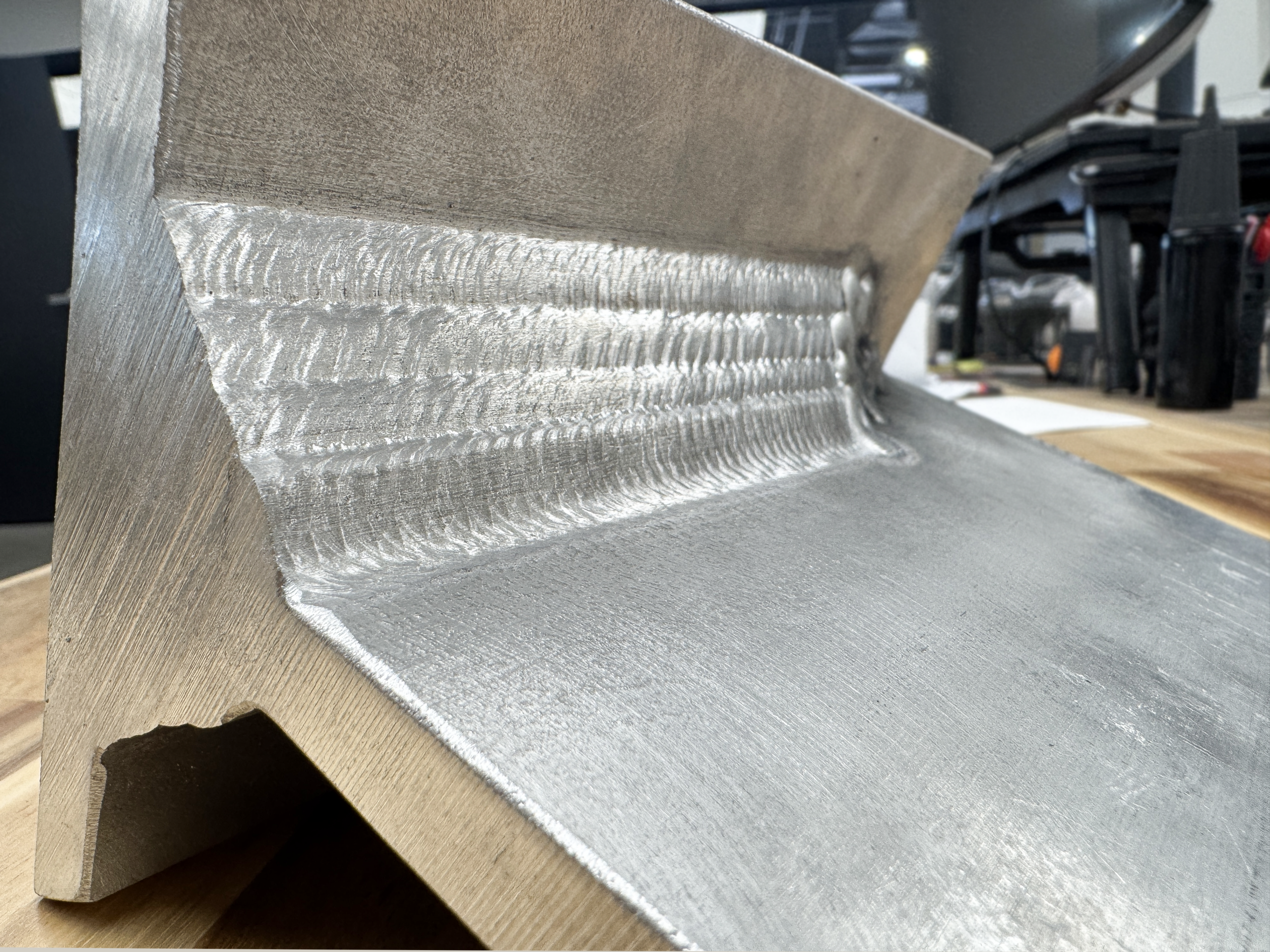
Mach Machines uses Fronius Cold Metal Transfer (CMT) technology in our aluminum welding systems. CMT uses reversing wire movement to create an exceptionally stable arc with significantly reduced heat input. The welding wire moves forward and pulls back during short circuits, introducing heat only briefly during the arc-burning phase.
This reduced heat input is fundamental for aluminum welding. Because aluminum conducts heat so aggressively, CMT’s lower thermal load dramatically reduces the warping and deformation that typically occur—especially on thinner aluminum parts.
Key benefits for aluminum welding automation include:
The combination of reduced heat and precise control makes CMT technology the foundation of our aluminum welding automation approach.
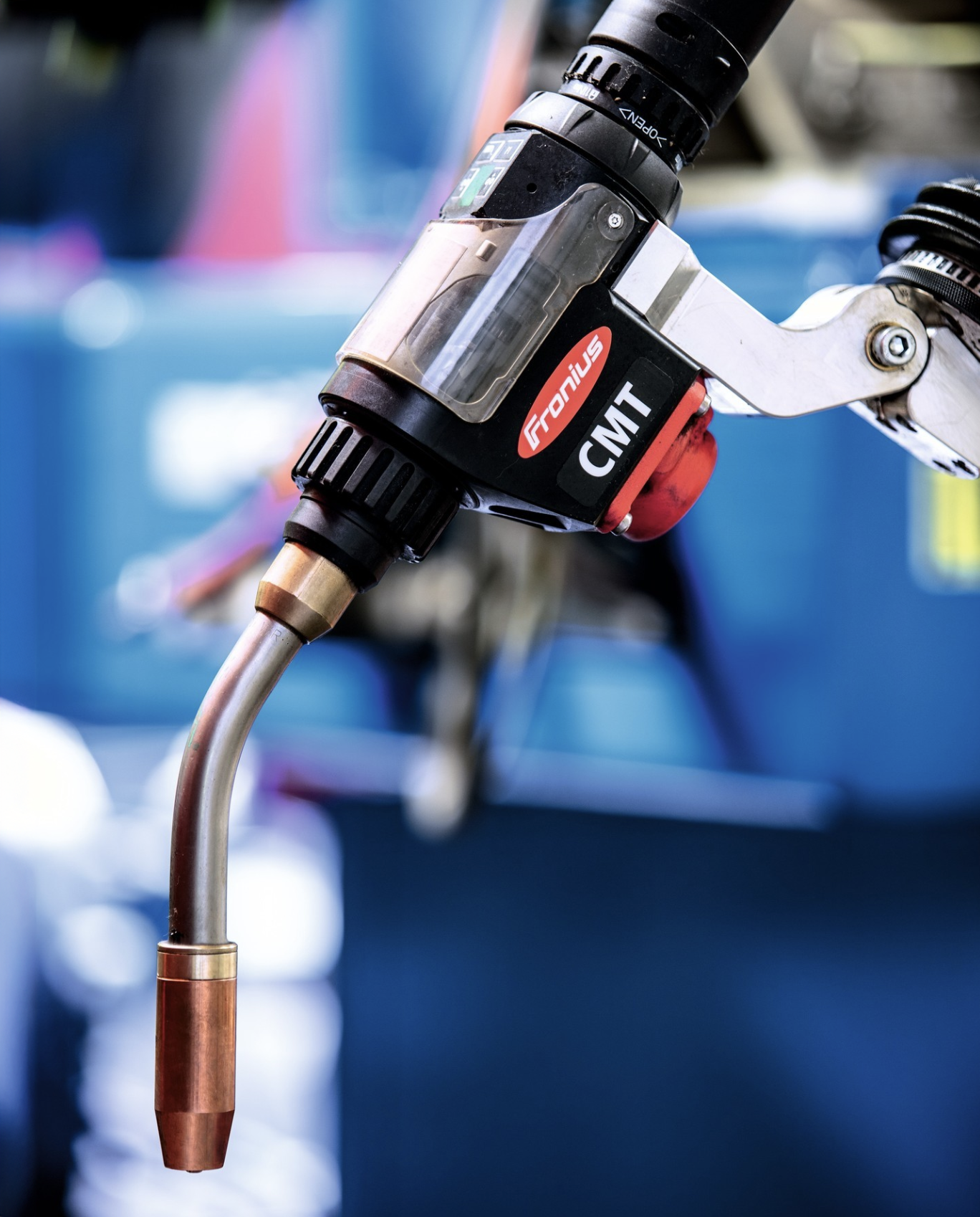
Aluminum’s reflective properties create challenges for vision-based seam tracking systems. Our Server Robot seam tracking technology helps accommodate the material reflectivity issues that make aluminum welding more complex than steel.
Aluminum welding requires specific consumables that differ from steel applications. We help determine the appropriate wire and gas selection for your specific aluminum grades and application requirements.
Beyond CMT technology, proper weld sequencing is critical for managing how heat moves through aluminum parts. Our offline programming software allows us to plan and program strategic weld sequences that work with our custom fixturing to minimize distortion in your final parts.

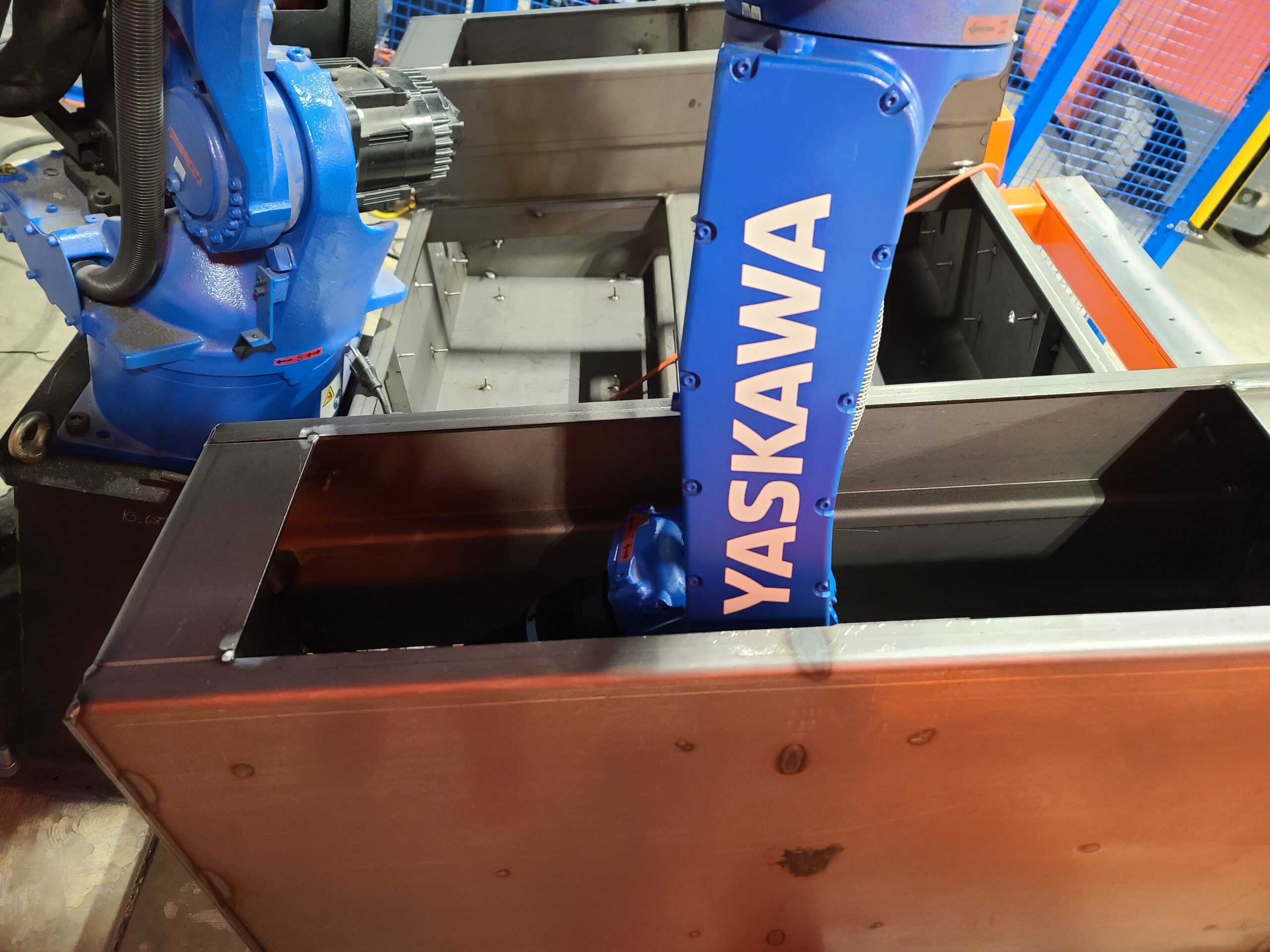
Mach Machines makes welding automation accessible to fabricators of all sizes. Our aluminum welding expertise integrates with our complete automation approach—from robot systems to our offline programming software.
Our complete automation solutions include:
Contact our team to discuss your aluminum welding application and find the right automation solution.
Aluminum conducts heat nearly as well as copper, causing warping and distortion that steel welders aren’t accustomed to managing. It requires a more scientific approach with specialized knowledge about heat management, proper sequencing, and material behavior. Finding skilled aluminum welders is extremely difficult—even harder than finding general welders.
CMT reduces heat input by 33% compared to standard dip transfer arc welding. Because aluminum conducts heat so aggressively, this dramatic heat reduction prevents the warping and deformation that typically occurs—especially critical for thinner aluminum parts where distortion would otherwise be severe.
While we see significant demand from the transportation industry, our aluminum welding expertise is applicable to any fabrication application where heat management and specialized welder availability pose challenges.
4460 Lake Forest Drive, Suite 210
Cincinnati, Ohio 45242

© 2025 Mach Machines